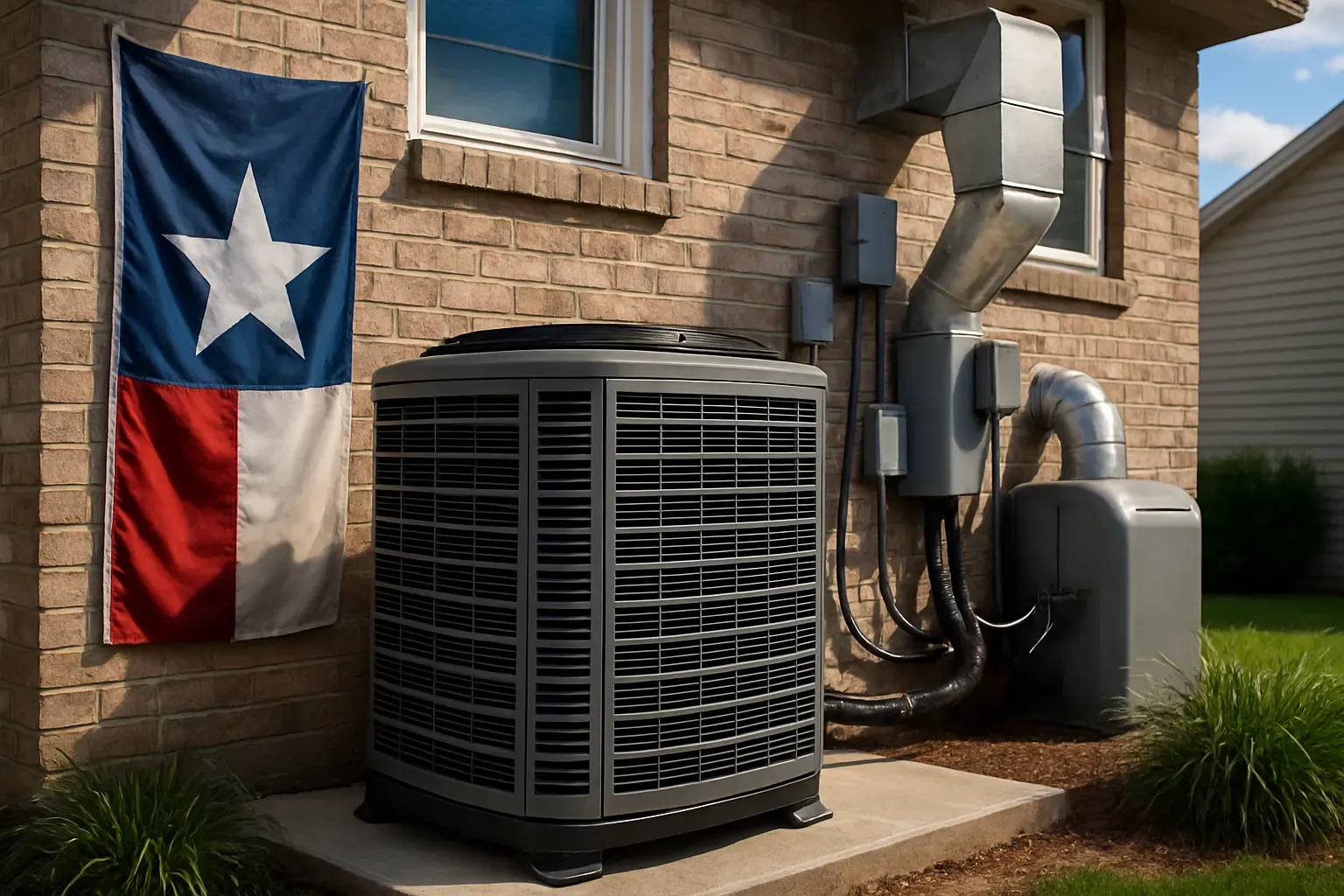
How Much Does a New AC or HVAC System Cost in Texas?
Este artículo está disponible solo en inglés.
%22%2F%3E%3C%2Fpattern%3E%3C%2Fdefs%3E%3Crect%20width%3D%221200%22%20height%3D%22675%22%20fill%3D%22url(%23g)%22%2F%3E%3Crect%20width%3D%221200%22%20height%3D%22675%22%20fill%3D%22url(%23d)%22%2F%3E%3Ctext%20x%3D%22600%22%20y%3D%22330%22%20text-anchor%3D%22middle%22%20font-family%3D%22Georgia%2C%20'Times%20New%20Roman'%2C%20serif%22%20font-size%3D%22150%22%20fill%3D%22rgba(255%2C255%2C255%2C0.22)%22%20font-weight%3D%22700%22%3ECiT%3C%2Ftext%3E%3Ctext%20x%3D%22600%22%20y%3D%22410%22%20text-anchor%3D%22middle%22%20font-family%3D%22Helvetica%2C%20Arial%2C%20sans-serif%22%20font-size%3D%2234%22%20letter-spacing%3D%226%22%20fill%3D%22rgba(255%2C255%2C255%2C0.85)%22%3ECONTRACTOR%20IN%20TEXAS%3C%2Ftext%3E%3C%2Fsvg%3E)
In Texas, replacing a central AC or full HVAC system typically runs somewhere in the low-to-mid four figures up into the low five figures, with most whole-system replacements landing in a broad range from roughly $6,000 to $15,000 or more. A simple AC-only swap on the smaller end can come in lower, while a large home needing a new furnace, coil, and ductwork lands higher. These are ballpark ranges, not quotes: your real price depends on your home's size, the efficiency you choose, and how much work the install involves, so the only way to know is to get a few local quotes and compare.
What a new HVAC system typically costs
Because homes and systems vary so much, think in ranges rather than a single figure:
- AC unit or condenser only: a smaller replacement when your furnace and ducts are fine.
- Full system (AC + furnace or air handler + coil): the most common replacement, and where most Texas homeowners land.
- High-efficiency or larger-home systems, or jobs needing ductwork: the top of the range and sometimes beyond.
Costs also shift by region and season. Prices can run higher in metros like Houston, Dallas, Austin, and San Antonio, and demand spikes during the peak of summer. A quote in spring or fall may look different from one during a July heat wave.
What drives the price
System size (tonnage)
HVAC is sized in "tons" of cooling. A bigger home needs more capacity, and more capacity costs more. Good contractors run a load calculation rather than guessing; an oversized or undersized system wastes money and comfort.
Efficiency (SEER2)
Higher-efficiency systems (measured in SEER2) cost more upfront but use less electricity. In the Texas heat, where the AC runs much of the year, a more efficient unit can pay back part of that premium over time. Ask each pro to show you the trade-off in plain terms.
Ductwork and install complexity
Old, leaky, or poorly designed ducts add cost, and so do tight attics, difficult access, electrical upgrades, or code-required changes. Two homes with the same square footage can price very differently based on what the crew has to do to install it right.
Brand and equipment tier
Premium brands and variable-speed or multi-stage equipment cost more than base models. A mid-tier system installed well often outperforms a premium unit installed poorly, so installation quality matters as much as the badge on the box.
Should you repair or replace?
Repair usually makes sense for a newer system with a single failed part. Lean toward replacement when several of these are true:
- The system is roughly 12–15+ years old.
- Repairs are frequent, or one repair costs a large share of a new system.
- It uses older R-22 refrigerant, which is expensive and being phased out.
- Energy bills keep climbing while comfort drops.
- Rooms are uneven, humid, or the unit struggles on the hottest days.
A helpful rule of thumb: if the repair is a big fraction of replacement cost and the unit is well into its second decade, replacing is often the better long-term value. Get the failing part diagnosed clearly before deciding.
Efficiency and rebates in the Texas heat
Because Texas summers are long and hot, efficiency is not just a comfort question; it shows up on every electric bill. Many Texas utilities and energy providers offer rebates or incentives for high-efficiency HVAC equipment, and federal tax credits may apply to qualifying systems. Programs change often and vary by provider and location, so confirm current details directly with your utility, your energy provider, and a tax professional before counting on any specific amount. Ask each contractor which rebates they see customers use in your area.
How to get an accurate price
The honest answer to "what will it cost me" is: get a few detailed, itemized quotes and compare them. Look for:
- An in-home load calculation, not a phone estimate.
- A written, itemized bid: equipment model, SEER2 rating, tonnage, ductwork, permits, and labor.
- Warranty terms on both equipment and labor.
- Proof of license and insurance you can verify yourself.
We list local, independent pros; we do not license or verify them for you, so confirm each contractor's license and insurance before you sign anything. Comparing multiple bids side by side is the single best way to spot a fair price and avoid overpaying.
You can post your HVAC replacement job free on Contractor in Texas and have local pros send you competing quotes, so you compare real numbers for your home instead of guessing from a range online.
Frequently asked questions
How long does a new HVAC system last in Texas?
Many systems last around 12–15 years, sometimes longer with regular maintenance. The heavy Texas cooling season can shorten that, so annual service and clean filters help you get the most life out of it.
Is a higher SEER2 system worth it?
Often yes in Texas, because the AC runs so much that lower energy use adds up. But the right answer depends on your home and how long you plan to stay. Ask each contractor to show the payback in dollars.
Why do quotes vary so much?
Different equipment tiers, sizing, ductwork needs, and labor all move the price. That variation is exactly why comparing several itemized quotes matters.
Ready for a real number? Post your project free on Contractor in Texas and compare competing quotes from local pros for your home.
Recursos oficiales de Texas y EE. UU.
Fuentes gubernamentales confiables sobre permisos, licencias, seguridad y normas relacionadas con este tema.
¿Listo para comenzar tu proyecto?
Publica tu proyecto gratis y recibe ofertas competitivas de contratistas locales de Texas.
Artículos relacionados