AC Not Cooling? 8 Things to Check Before You Call a Pro
%22%2F%3E%3C%2Fpattern%3E%3C%2Fdefs%3E%3Crect%20width%3D%221200%22%20height%3D%22675%22%20fill%3D%22url(%23g)%22%2F%3E%3Crect%20width%3D%221200%22%20height%3D%22675%22%20fill%3D%22url(%23d)%22%2F%3E%3Ctext%20x%3D%22600%22%20y%3D%22330%22%20text-anchor%3D%22middle%22%20font-family%3D%22Georgia%2C%20'Times%20New%20Roman'%2C%20serif%22%20font-size%3D%22150%22%20fill%3D%22rgba(255%2C255%2C255%2C0.22)%22%20font-weight%3D%22700%22%3ECiT%3C%2Ftext%3E%3Ctext%20x%3D%22600%22%20y%3D%22410%22%20text-anchor%3D%22middle%22%20font-family%3D%22Helvetica%2C%20Arial%2C%20sans-serif%22%20font-size%3D%2234%22%20letter-spacing%3D%226%22%20fill%3D%22rgba(255%2C255%2C255%2C0.85)%22%3ECONTRACTOR%20IN%20TEXAS%3C%2Ftext%3E%3C%2Fsvg%3E)
If your AC is running but the house won't cool down, the most common causes are simple: a thermostat set wrong, a clogged air filter choking airflow, a tripped breaker, or a dirty/blocked outdoor unit. Start with those, then check vents, the condensate drain line, and a possible frozen coil. Many no-cool problems are fixable in a few minutes with no tools — but if the system is iced over, leaking, or still blowing warm after these steps, it's time to call a licensed HVAC pro.
Start here: the quick, safe checks
Work through these in order. Give the system 15–30 minutes to respond after each change before assuming it didn't help — an AC doesn't cool instantly, especially during a Texas afternoon.
1. Check the thermostat
Confirm it's set to COOL (not just "fan" or "auto/off"), the target temperature is a few degrees below the room reading, and the fan is on AUTO rather than ON. Fan set to ON blows air constantly even when the system isn't cooling, which feels like warm air from the vents. If the screen is blank or dim, replace the batteries.
2. Replace a dirty air filter
A clogged filter is one of the top reasons an AC stops cooling well. It starves the system of airflow and can even freeze the coil. In Texas, where the AC runs hard for much of the year, check the filter monthly and swap it when it looks gray or dusty. A fresh filter is cheap insurance and often fixes weak cooling on its own.
3. Look at the breaker and switches
Find your electrical panel and check for a tripped breaker labeled for the AC or air handler — flip it fully OFF, then back ON. Also confirm the switch near the indoor furnace/air handler is on. If a breaker trips again right after you reset it, stop and call a pro; repeated tripping points to an electrical fault, not something to keep resetting.
4. Inspect the outdoor unit (condenser)
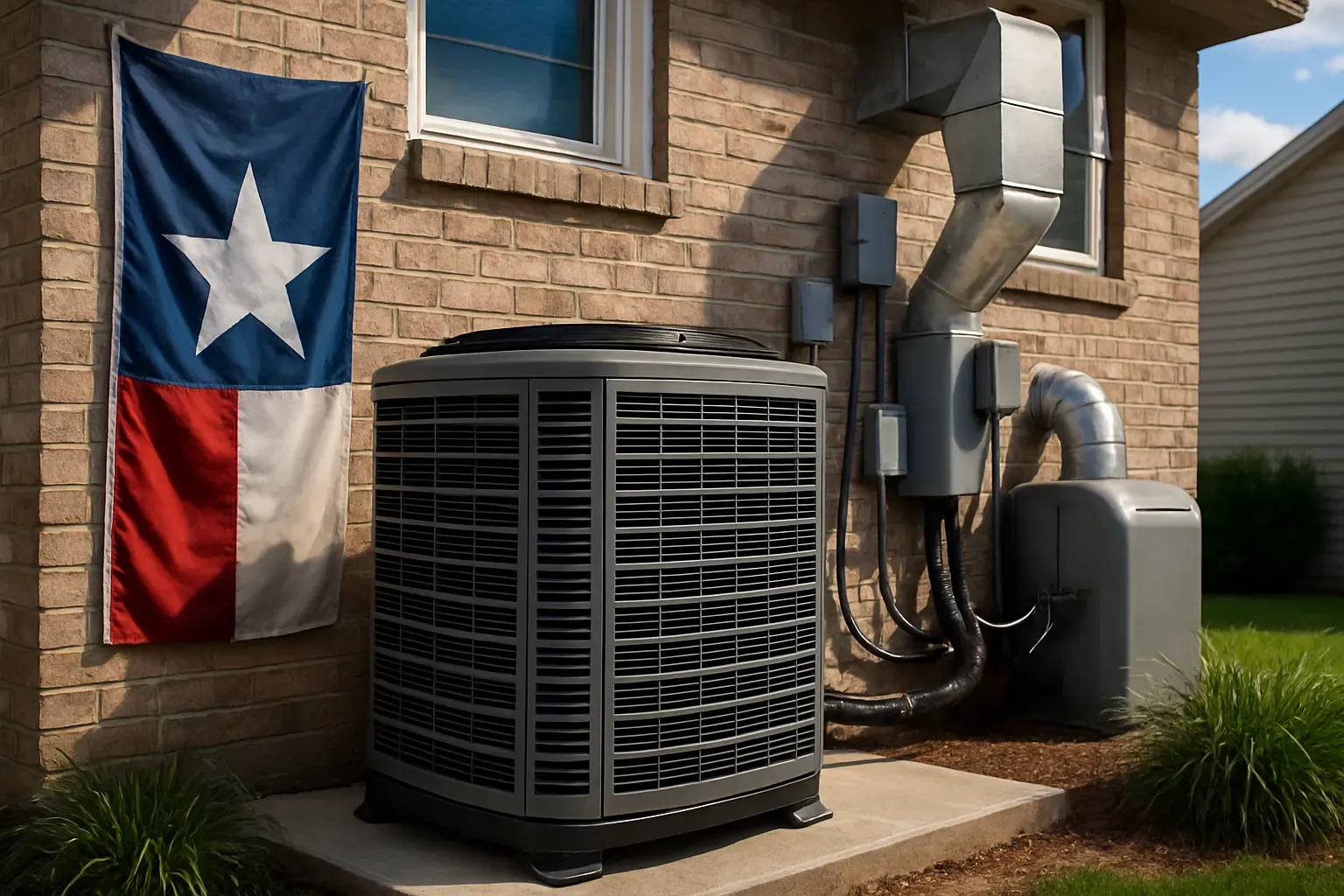
Go outside to the big metal unit. It should be humming and the top fan spinning. Clear away grass clippings, leaves, cottonwood fluff, and weeds, and keep at least two feet of open space around all sides. Gently rinse caked dirt off the fins with a garden hose (never a pressure washer). A smothered condenser can't dump heat, so the house never cools.
5. Open and unblock the vents
Walk the house and make sure supply vents are open and not covered by rugs, furniture, or boxes. Closing too many vents to "save energy" can actually reduce airflow and hurt cooling. Also confirm the return-air grille isn't blocked.
6. Check the condensate drain line
Many systems shut off cooling when the drain line clogs and a safety float switch trips — common in humid Texas summers. Look for standing water in the drain pan or a line that isn't dripping outside on a hot day. If you're comfortable doing it, clearing a visible clog at the outdoor drain outlet can restore cooling; otherwise leave it to a pro.
7. Look for a frozen coil
If you see ice on the copper refrigerant line or the indoor coil, turn the system to OFF and set the fan to ON to help it thaw (this can take a few hours). Frozen coils usually trace back to a dirty filter, blocked vents, or low refrigerant. Running an iced-up system can damage the compressor, so don't force it.
8. Give it time and note the symptoms
On a 100-degree Texas day, a healthy AC may only hold the house 15–20 degrees cooler than outside. If it's keeping up but slowly, the system may just be maxed out. Write down exactly what's happening — warm air, weak airflow, ice, water, odd noises, or short cycling — so you can describe it clearly if you need help.
When to stop and call a licensed HVAC pro
Some problems aren't safe or practical to DIY. Call a professional if you notice any of these:
- Warm air from the vents after you've checked the filter, thermostat, breaker, and outdoor unit
- A breaker that trips repeatedly, burning smells, or sparking
- Hissing, or ice that keeps returning after thawing (possible refrigerant leak)
- Water leaking indoors, or the system won't turn on at all
- Loud grinding, buzzing, or short cycling (turning on and off rapidly)
Refrigerant, electrical repairs, and compressor work require the right training, tools, and often licensing. When you hire, confirm the contractor's license and insurance yourself before work begins.
What AC repair typically costs in Texas
Costs vary widely by the problem, your equipment, and where you live. A service call and minor fix (capacitor, drain clearing) is often a few hundred dollars, while major repairs like a compressor or a full system replacement run into the thousands. Anyone quoting an exact price sight-unseen is guessing. The reliable way to know what your repair should cost is to post your job on Contractor in Texas and compare a few local quotes side by side — it's free, with no obligation.
Frequently asked questions
Why is my AC running but not cooling?
Usually airflow or heat-rejection is blocked — a dirty filter, closed or covered vents, a smothered outdoor unit, or a frozen coil. Less commonly it's low refrigerant or an electrical part. Work through the checks above; if warm air continues, have a pro diagnose it.
How long should I wait before calling someone?
If simple checks don't restore cooling within an hour or two — or you see ice, water, or a repeatedly tripping breaker — call a licensed HVAC pro rather than keep running the system, which can cause bigger damage.
Can a dirty filter really stop my AC from cooling?
Yes. A clogged filter restricts airflow enough to weaken cooling and can freeze the coil, which stops cooling entirely. It's the first thing to check and the easiest to fix.
Not sure whether it's a quick fix or a bigger repair? Describe the problem once on Contractor in Texas and let local HVAC pros send you competing quotes — free to post, no phone tag, and no obligation to hire.
Official Texas & U.S. resources
Authoritative government sources for permits, licensing, safety, and standards related to this topic.
Ready to start your project?
Post your project for free and get competing offers from local Texas contractors.
Related articles